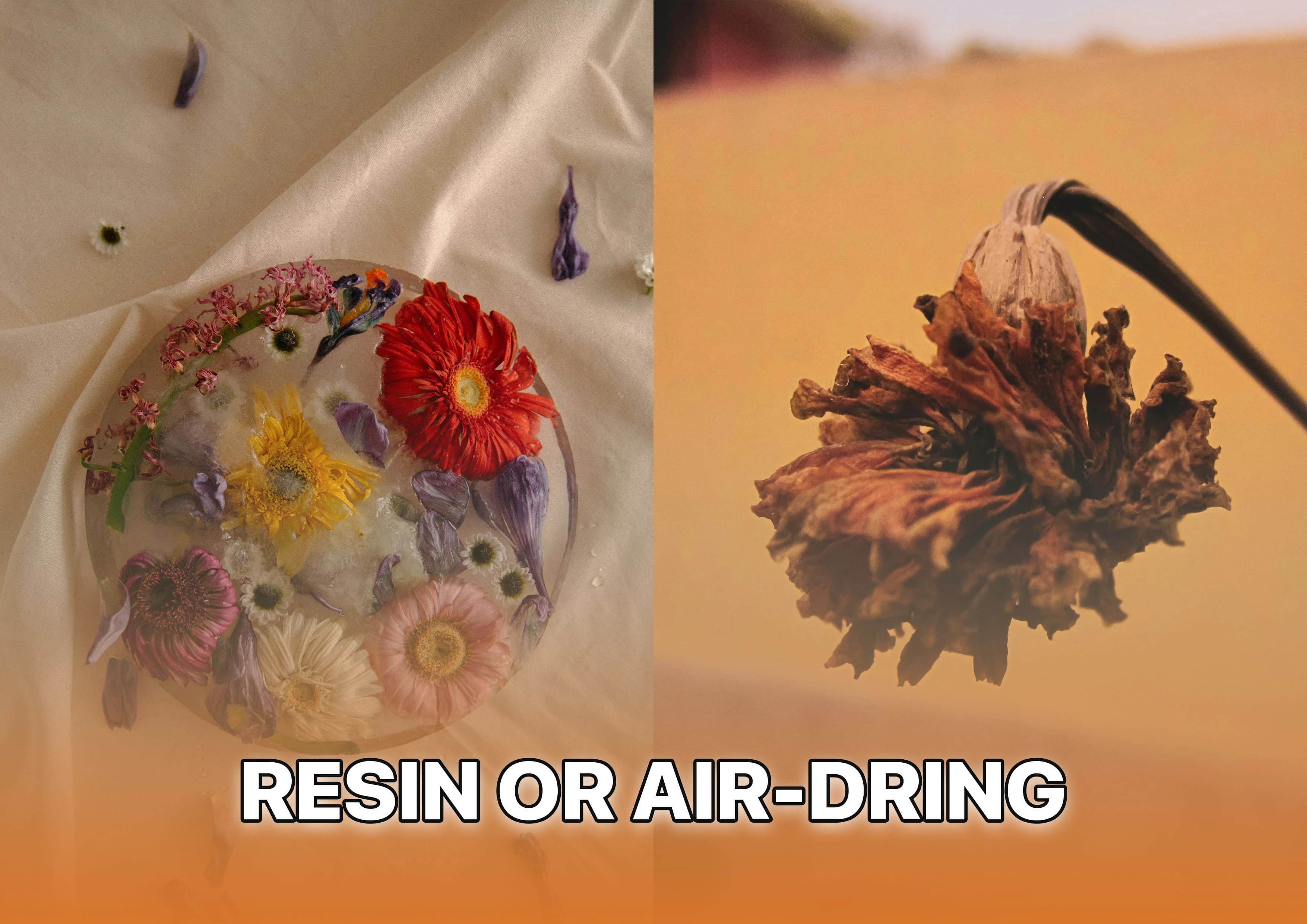
Resin vs. Air Drying: Which Flower Preservation Method is Best?
Your big day has come and gone, and you’re left with a gorgeous bridal bouquet that you aren't ready to let go of. Keeping your flowers is a no-brainer, but deciding how to save them can be a bit overwhelming.
When exploring different flower preservation methods, two popular paths emerge: traditional Air Drying and modern Resin Preservation. While both methods successfully keep your flowers from hitting the green bin, they produce completely different results in terms of color retention, structural durability, and overall aesthetics.
To help you choose the best fit for your wedding blooms, let’s break down the pros, cons, and key differences between these two preservation styles.
The Traditional Approach: Air Drying
Air drying is the time-tested, classic way to preserve flowers. It involves tying your bouquet upside down in a dark, dry, and well-ventilated room for several weeks until all the moisture completely evaporates from the plant tissues.
The Pros:
- The Vintage Aesthetic: Air-dried flowers take on a charming, antique, and deeply romantic look. They look beautiful arranged in a rustic stoneware vase or a shadow box.
- Low Initial Effort: You can hang them up yourself immediately after the wedding without needing special equipment or immediate professional assistance.
The Cons:
- Severe Color Loss: As flowers air-dry, their vibrant pigments oxidize and fade drastically. Bright red roses often turn a very dark crimson or black, white petals turn antique cream or brown, and pinks turn into muted dust tones.
- Extreme Fragility: Air-dried flowers are incredibly brittle. A slight breeze, a curious pet, or a gentle touch can cause petals to shatter and crumble into dust.
- The Humidity Risk: In Sri Lanka’s high-humidity tropical climate, exposed air-dried flowers act like sponges, absorbing moisture right back out of the air. This frequently leads to sagging, petal softening, and the growth of destructive mold or mildew over time.
The Modern Alternative: Resin Preservation
Resin preservation is a specialized, multi-step process. The flowers are first completely dehydrated using professional-grade silica crystals to lock in their shape. Once dry, they are cast into multiple layers of liquid epoxy resin, which cures into a crystal-clear, glass-like solid block.
The Pros:
- Unmatched Color & Shape Retention: Because the silica crystals pull moisture out rapidly without flattening the flower, your blooms retain their exact 3D shape. Your roses stay plump, and your petals don't shrink. Pigments are locked away from oxygen, preserving their original, vibrant colors beautifully.
- Permanent Protection & Durability: Once cured inside resin, your flowers are completely sealed from the outside environment. They are 100% waterproof, dustproof, and shielded from tropical humidity. Your keepsake is solid, durable, and impossible to shatter by touch.
- Versatile Aesthetics: Resin allows you to turn flowers into functional art—like freestanding geometric blocks, elegant trays, coasters, or personalized monogram letters that blend seamlessly into modern home decor.
The Cons:
- Professional Investment Required: Achieving a flawless, bubble-free finish with minimal yellowing requires premium, UV-stabilized resin and professional equipment. It’s a meticulous craft that is highly difficult to pull off successfully at home as a DIY project.
- Natural Color Shifts: While color retention is excellent, certain flowers still undergo minor chemical shifts when interacting with resin. For example, some white petals can become slightly translucent, and certain deep reds may darken slightly.
Head-to-Head Comparison
| Feature | Air Drying | Resin Preservation |
|---|---|---|
| Aesthetics | Rustic, antique, vintage, and muted. | Modern, vibrant, glass-like, and three-dimensional. |
| Color Retention | Low. Colors fade significantly into browns and dark tones. | High. Colors remain vibrant and close to their fresh state. |
| Shape & Structure | Shrunken, flattened, and highly wrinkled. | Keeps the natural, full 3D volume of the fresh bloom. |
| Durability | Low. Very brittle, delicate, and prone to breaking. | Extremely High. Solid, permanent, and sealed forever. |
| Climate Resilience | Poor. Prone to mold and moisture damage in Sri Lanka. | Excellent. Completely safe from humidity and dust. |
The Verdict: Which Method Should You Choose?
The right choice ultimately depends on your personal interior style and how long you want your keepsake to last.
If you absolutely love the rustic, dark academia, or vintage look and have a safe, enclosed glass cabinet to protect the blooms from humidity, Air Drying offers a classic, sentimental feel.
However, if you want to preserve the exact fullness, bright color, and beautiful details of your bouquet in a durable piece of art that survives Sri Lanka's humid climate for decades, Resin Preservation is clearly the superior method.
Let Autumn Lane Preserve Your Big Day
At Autumn Lane, we take the stress out of flower preservation. We combine professional dehydration techniques with high-quality, UV-resistant resin to ensure your bridal bouquet stays as radiant as it was on your wedding morning.
Slots are limited per wedding season to maintain the highest quality for every bride. Send us a message today to check our availability and secure your custom preservation slot!
About the Author: Lakmini Kaushalya
Lakmini is the lead preservation artist and creator behind Autumnlane Sri Lanka. She specializes in hand-pouring thick resin blocks and custom floral arrangements, transforming wedding day Poruwa arrangements and bouquets into archival botanical keepsakes.